On January 17, 2007, the Princeton's daily newspaper wrote a satirical article by a supposed "Lian Ji", (a reference to a Yale student who has filed a civil rights complaint against Princeton over potential discriminatory practices), that extended beyond Jian Li's civil rights complaint and parodied the asian (more specifically Chinese) race in general.
I won't bother you with details or a long post relating to this issue (there are others more involved in representing those disaffected by the article, and most importantly there are representatives at Princeton leading the charge) save to say that I am a supporter of those that feel that the article, even though it was meant as humorous, was insensitive and I am shocked that editors at The Prince didn't realize this when they were organizing their newspaper. Even though they probably did not mean to be racist, and it was meant to be a little offensive and shocking, I felt like it crossed the line and marginalized our struggles and our accomplishments and may have promoted stereotypes that can further relegate and/or do harm to our standing in society.
Some of the most offensive stereotypes included, among others: "Lots of bulldogs here for me to eat. I can wear my knockoff polo shirts, and no one notice." and "We cook greasy food, wash your clothes and let you copy our homework. " The first quote is self-explanatory, and with regards to the latter quote, some of our ancestors and even current family members may still work in laundromats and/or work in restauraunts, so you can still see why such references is historically and can still be personal to many of us.
To me, the article reminded me of the cartoons/spoofs of African Americans that I saw in an English course from the 1950s that typified big lipped, horny, and incompetent characters that marginalized the struggles of African Americans at that time. It wasn't okay then, and it sure isn't okay now. The point is that:
Ultimately, insensitivity does not improve tolerance in any community.
Note: I don't believe that The Prince's article and the editors responsible for the publication of this article can be said to represent the Princeton community. I think that this is an issue between the publishers and the disaffected communities.
Interested in this issue? Further Reading:
Facebook Group: Dear Daily Prince, This Isn't Funny, It's Racist
Trenton Times: Many See Student Column as No Joke January 20, 2007
Daily Princeton: Editor's Note January 18, 2007
Huffington Post: The Princetonian Just Isn't Funny, It's Racist January 18, 2007
Associated Press: Princeton Newspaper Column Stirs Controversy January 21, 2007
Saturday, January 20, 2007
Why It Is NOT Okay


Monday, January 15, 2007
Martin Luther King Jr.'s rejection of Literalism
King "wanted to develop an intellectually respectable form of Christianity that did not require people to simply abandon their rational, critical abilities," Carson said. The essential truth King saw, according to Carson, was the social gospel -- "to see the Bible as a message of spiritual redemption and global social justice." [Emphasis Added.]
[However]
Duke Divinity School Professor Richard Lischer, who has extensively studied and written about King's theology, believes that his rejection of literalism has to be viewed in context.
King went to seminary and received a doctorate from two bastions of liberal theology, Crozer Theological Seminary and Boston University, respectively. A professor told him that neither Moses nor the exodus were real -- an irony, given that King was called "new Moses" for his role during the civil rights era.
Literalists were also linchpins of segregation, said Lischer, author of "The Preacher King: Martin Luther King, Jr. and the Word that Moved America." To accomplish his goals, Lischer said, King had to distance himself from them.http://www.sfgate.com/cgi-bin/article.cgi?f=/c/a/2007/01/15/MLK.TMP
For those who read my essay, An Appraisal of the Evangelical Power Structure: A Duality between Faith and Enlightenment, I don't feel so bad for spending so much time on it. :)
Friday, January 12, 2007
An Appraisal of the Evangelical Power Structure: A Duality between Faith and Enlightenment
[1] The influence of religion in
[2] Before November 1st, 2006, Reverend Ted Haggard’s credibility was almost absolute. It is generally assumed that visible fundamentalists such as Haggard are distinctly characterized by a livelihood based on their faith and their religion’s moral obligations (especially by the followers of the religious right.) This reputation gives power to the visible fundamentalists’ moral authority, which they preach to the general public quite literally from their pulpits about issues concerning personal lifestyle, scientific research, and human rights. Their influence is based upon their ability to lead others by their example and their convictions. However, on November 1st, 2006 Mike Jones, a former male escort, alleged to the press that he had been paid for sex on several occasions from a prominent evangelical leader. Two days later on November 3rd, news broke that Reverend Ted Haggard of the National Association of Evangelicals, an umbrella organization which comprises of almost thirty million members in the
[3] Haggard was an outspoken critic against gay marriage and adamantly condemned homosexuality. However, even though Haggard had been “outed”, this event did little to change the mindset of many Christian fundamentalists who still believe that homosexuality is a sin, and who continue to vote for measures that prohibit gay marriage. Before this incident, Ted Haggard was one of the visible representatives of religious fundamentals who acted as an advisor to President Bush and who in 2005 was a member of TIME Magazine’s 25 Most Influential Evangelicals list[ii]. If religion is truly a collectivization, a finely tuned organizational machine, then Haggard’s “outing,” having had little effect on the mindset of Christian fundamentalists indicates that individuals themselves have little moral authority over the religious establishment. Rather, it is the faith that others place on these individuals that lends them their authority. Once that respect is withdrawn, the individual is then discarded because he is no longer useful in organizational activities. In essence, the religious establishment acts somewhat similarly to a machine with expendable parts. When one part is no longer useful, it is replaced. However, even though individual components of the machine are expendable, the effectiveness of the religious establishment is highly influenced by the collectiveness of the whole. Currently, the machine seems to be working extremely well, as the religious right has grown more active since the countercultural and social movements of the sixties and seventies, and has tipped the majority of the presidential elections since the 1980s in the Republicans’ favor.
[4] When St. Augustine of Hippo coined the phrase, “Crede, ut intelligas” (“Believe, in order that you may understand”), he was espousing the idea that faith was the basis for knowledge and comprehension. Unsurprisingly, this principle makes perfect practical sense. This philosophy assumes that our ideological convictions are only attainable through our confidence in the truth of those beliefs in various ideas, persons, or things. If we do not believe or refuse to believe in an idea’s or an argument’s or a person’s merit, then we cannot be persuaded by what is essentially unacknowledged. On the flip side, belief also serves as a powerful tool that helps preserve one’s convictions in spite of contradictory evidence otherwise.
[5] However, how are we to assume that religious behavior and faith-based information processing and decision-making is mutually excludable, or even separate and different from, individual cogitation? There is some scientific foundation that describes the discrepancy and autonomy between faith and individual cogitation forms of processing. Epstein, Pacini, and Denes-Raj (1991) in “Individual Differences in Intuitive-Experiential and Analytical-Rational Thinking Styles” found that the results of their study “favored the independent relation of the two systems.” Although the study did not specifically link religion and individual cogitation to one form of processing over another, we can assume via each of the different characterizations of the two classifications which form of thought processing belongs to which classification. According to the Cognitive-Experiential Self-Theory (CEST), people process information in essentially two different systems, an experiential system and a rational system[v]. The experiential system is characterized to be more intuitive, “automatic and effortless, pleasure-pain oriented, more crudely differentiated, [and] self-evidently valid.” On the other hand, the rational system is less intuitive, more “analytic, intentional, effortful, logical, more highly differentiated, [and] experienced actively and purposefully”[vi]. Members of the church whose faith influences their daily decision making processes and who, for better or for worse, readily accept the written word of the Bible fall under the experiential information processing and decision-making system. People whose individual cogitation are indicated through their pursuit of truth via the scientific method and logical thinking can be characterized as representative of the rational system. It seems that through these characterizations, experiential thinking is more easily attainable and less intellectually stimulating, while the rational system somewhat suppresses intuitive thought.
[6] In essence, faith is a natural form of ideological collectivization because there can be comparatively little room for differentiated opinions and information interpretation in religion. Religious studies essentially require acceptance of the written word of God. For an institution whose history can be traced back several millennia, the basic principles and tenets from the organized Christian faith are relatively similar to those from its founding. It can be argued that the scientific method, even though it has been in existence for a shorter time period, is similar to fundamental Christian tenets in that the scientific method has also become a tradition and a tenet for followers of science. However, the essential difference between the scientific method and fundamental Christian beliefs are that the scientific method is a methodology in which truth is an attainment rather than a preconceived notion (truth must be teased out through experimentation, and even then truth is still debatable). The key difference between the two forms of processing are the differences in the ability of its practitioners to challenge its teachings—it is harder to challenge traditional values than it is to challenge say, a humanist’s claim that religion and science are mutually exclusive (this is not an endorsement of that idea). Thus, there is more disagreement and individuation under the scientific method than under the Christian faith. Because of those disagreements, practitioners of individual cognition appear less organized than members of the Christian faith.
[7] It is easier for Christian leaders to represent Christian fundamentalists because there is more consensus, and a more thorough and stable consensus, among members of the religious right. This greater group togetherness can partially be attributed to the leadership, and the type of leadership, of the moral authority. John Levi Martin, in his article “Power, Authority, and the Constraint of Belief Systems” (2002), attempted to examine “the formal properties of the belief systems of groups.” In his study, he examined the degree of consensus among group members. He found that “the mean tightness for groups with authorities [is higher] as opposed to […] the groups without authorities.”[vii] Among the types of groups with more group consensus Martin included religious and political organizations. However, simply acknowledging the effect of the evangelical leadership on their organization does not wholly recognize the persuasive elements behind the authority of evangelical leadership. To answer part of this question, we can turn to many of these religious leaders themselves.
[8] Fundamentalist leaders naturally admit that they are serving a higher power through their actions. Prominent evangelist leader Billy Graham has been proudly quoted stating, "My one purpose in life is to help people find a personal relationship with God, which, I believe, comes through knowing Christ."[viii] (Emphasis added.) In an interview, Jerry Falwell, another influential fundamentalist, also acknowledged that one of his primary reasons for becoming a pastor was that “I wanted to study the Bible and prepare myself for whatever God wanted me to do. My heart was burning to serve Christ.”[ix] The difference between serving a higher power and serving truth are twofold: one of the differences concerns the objective of the claimant, and the other difference concerns how the claimant goes about (or can go about) accomplishing those objectives. In the experiential system, which more accurately depicts faith and religion, truths tend to be more self-evidently valid. This means that truths in the experiential system intuitively feel better. Chaiken and Maheswaran (1994) acknowledge that
“Numerous experiments have shown that the attitude judgments of low motivation or low-capacity subjects are influenced very little by the caliber of a message’s persuasive arguments but are influenced quite substantially by heuristic cues such as source credibility, other people’s opinions, or the sheer length of a message.”[x]
Quite simply, the appearance of a strong or natural argument is more important to “low-motivation or low-capacity subjects” than message content. Chaiken and Maheswaran (1994) additionally affirm that “most persuasion tests […] have included conditions in which message content contradicts the validity of heuristic-based inferences; for example, expert sources or lengthy messages present weak arguments (e.g. Petty & Cacioppo, 1984a; Petty et al., 1981; Wood & Kallgren, 1988; Wood et al., 1985).”[xi] That is not to say that observers of religious practices are “low-motivation or low-capacity subjects”, but the fact of the matter is that most members of the Church are not required to be relentless scholars of the Bible. Many are expected to accord themselves of their faith’s basic principles and faithfully comply with the teachings of the Bible, but relatively few (only a small percentage) of Christians are priests or pastors or actively promote or educate others on the teachings of the Bible. Because of this relative lack of religious scholarship, churches rely on active volunteers and dedicated priests and pastors to spread the word of God and keep the local religious community active. These local leaders, who in turn are somewhat directed by their superiors (people higher up in the religious hierarchy), are the source from which religious teachings can be provided to the public. This hierarchical structure, with the bottom populated by the people who merely believe in and attend religious services, is led by a smaller group of highly respected pastors and religious leaders who are almost identical (collectivized) in their convictions and their teachings.
[9] Organizationally, the religious evangelical establishments are also one of the most successful social organizations in the country. An Economist article “Therapy of the masses” (2003) describes the following:
On any Sunday, over 3,000 people from the suburbs of southern
Thus churches, in addition to being reputable charitable social organizations, have also provided a means for social mobility by allowing individuals and participants to obtain social networks and build social capital. Pui-Yan Lam (2002) touches upon this idea and summarizes
[10] Evangelical leaders tend to take advantage of experiential methods of persuasion. Faith is expressed biblically, through consumerist media, and through popular culture such as in movies, television shows, rock concerts, and best sellers. The American Christian, inundated with messages and news and promotions concerning church and religious activities, can hardly avoid the continual adjuration of pastors and religious fundamentalists. Most of these visible, fundamentalist leaders are supported argumentatively in two respects, first by their credentials and second by their targeted messages to the American public. Chaiken and Maheswaran (1994) have already established that credibility is an important factor in experiential persuasion, which requires comparatively little cogitation as compared with rational persuasion. In a separate study, Arpan and Raney (2003) indicate that the perception of credibility is also influenced by how consistent a news outlet’s reporting is in comparison with its audience’s point of view. “More recent research shows, however, that a news outlet’s ability to be perceived as credible may stem less from reporting efforts and more from issue involvement and cognitive processes of audience members.”[xiv] In a complementary article, Slater and Rouner (1996) conclude that “this study suggests that source credentials may not matter to readers so much as the superficial plausibility and quality of what is said […] Under such circumstances, credentials regarding expertise and bias simply do not have a very large effect on beliefs, compared to the quality of the message.” So that in some respects, credentials and charisma appear to not be as mutually excludable as they would seem. This tells us that a character’s charisma can compensate for any lack of credentials. In both cases, whether or not credentials (and similarly, reputation), or charisma is most appealing to audience members, evangelist leaders can take advantage of both concepts. Because most of them have been or are currently pastors in a church, most can generally be assumed to have charisma. Some, like Pat Robertson, are the hosts of popular television shows. Every evangelist leader also has the advantage of being able to claim to serve a higher power. They do not have to ask members of the church or their local congregation for their votes or their money. Instead, they elicit donations for charitable causes, and are on energetic quests to “save souls”. Their reputation, therefore, is often assumed to be impeccable, and geared toward serving the public good. They also tend to appeal to their listeners emotions, including hope, fear, and charity in their presentations and adjurations.
[11] Reverend Ted Haggard was one of these influential figures, and proved very useful to the fundamentalist organization. But after being “outed”, Reverend Ted Haggard found himself abandoned and politically friendless in the eyes of the public. In spite of his almost weekly consultations with the White House, and other evidence of his influence (including a White House phone call asking for his consultation with the Harriet Miers Supreme Court Nomination), even the White House attempted to distance itself from Haggard by painting him as inconsequential. According to CNN.com, “Spokesman Tony Fratto told reporters Friday that it was inaccurate to portray him as being close to the White House, insisting Haggard was only an occasional participant in weekly conference calls between West Wing staff and leading evangelicals.”[xv] He had little support because he had quickly become the opposite of what the evangelical machinery needed to function as it had. Evangelicals, who for years have been preaching about homosexuality as a sin, could not afford to have such an iconic contradiction in the midst of their leadership. Because of his loss of credibility, Haggard could no longer avail himself to the experiential method of persuasion and was useless as a public figure. Therefore, Reverend Ted Haggard quickly and quietly resigned and after a couple days his name has hardly mentioned in the mainstream press ever since. Thus is the nature of the politically and socially influential religious organization. The political machinery of the religious right continues to function swimmingly even though the Republicans lost the Legislative Branch this past midterm election. Their next biggest challenge on the horizon will be the 2008 Presidential Election.
[i] Cooperman , Alan and Brubaker, Bill “Church Leader Admits Buying Drug and Getting Massage From Gay Escort” http://www.washingtonpost.com/wp-dyn/content/article/2006/11/03/AR2006110300317.htmlhttp://www.cnn.com/2006/US/11/03/haggard.allegations/ and Gallagher, Delia “Church Leader Admits Buying Drug and Getting Massage From Gay Escort”
[ii] TIME Magazine, “25 Most Influential Evangelicals in
[iii] A comprehensive list can be found on http://www.adherents.com/Religions_By_Adherents.html “A major source for these estimates is the detailed country-by-country analysis done by David B. Barrett's religious statistics organization, whose data are published in the Encyclopedia Britannica (including annual updates and yearbooks) and also in the World Christian Encyclopedia (the latest edition of which - published in 2001 - has been consulted).”
[iv] Egon Mayer, Ph.D., Barry A. Kosmin, Ph.D., and Ariela Keysar, Ph.D. “American Religious Identification Survey” http://www.gc.cuny.edu/faculty/research_briefs/aris/religion_identity.htm
[v] CEST is descried in the research of Epstein, Pacini, and Denes-Raj in their paper “Individual Differences in Intuitive-Experiential and Analytical-Rational Thinking Styles” published in the Journal of Personality and Social Psychology, 1996 Vo. 71, No. 2, 390-405
[vi] The characterizations of the experiential and rational CEST systems was summarized from a table referenced in Epstein, Pacini, and Denes-Raj (1996) and was adapted (with permission) from “Cognitive-Experiential Self-Theory: An Integrative Theory of Personality” by S. Epstein, 1991, in R.C. Curtis, Editor, The Relational Self: Theoretical Convergences in Psychoanalysis and Social Psychology New York: Guilford Press Copyright 1991.
[vii] Martin, John Levi “Power, Authority, and the Constraint of Belief Systems” published in the American Journal of Sociology Vol. 107 No. 4 (January 2002): 861-904 Copyright by The University of Chicago. Numerical figures in this specific reference are not included, this information is summarized in the brackets.
[viii] Quote obtained from an online biography of Billy Graham available at http://www.billygraham.org/mediaRelations/bios.asp?p=1
[ix] Quote available online from a transcript of an interview by Brenda Clements of the Lynchburg News and Advance available at http://falwell.com/meet_dr_falwell.php
[x] Chaiken, Shelly and Maheswaran, Durairaj “Heuristic Processing Can Bias Systemic Processing: Effects of Source Credibility, Argument Ambiguity, and Task Importance on Attitude Judgment”, Journal of Personality and Social Psychology 1994 Vol. 66, No. 1, 460-473 Copyright 1994 by the American Psychological Association, Inc.
[xi] The following are referenced in Chaiken and Maheswaran (1994) article: Petty, R.E., & Cacioppo, J.T. (1984a). “The effects of involvement on responses to argument quantity and quality: Central and peripheral routes to persuasion” Journal of Personality and Social Psychology 46, 69-81; Petty, R.E. and Cacioppo (1981) Attitudes and persuasion: Classic and contemporary approaches Dubuque, IA: Brown; Wood, W., & Kallgren, C.A. (1988) “Communicator attributes and persuasion: Recipients’ access to attitude-relevant information in memory” Personality and Social Psychology Bulletin; Wood, W., Kallgren, C.A., & Preisler, R.M. (1985) “Access to attitude relevant information in memory as a determinant of persuasion: The role of message attributes” Journal of Experimental Social Psychology, 21, 73-85
[xii] Author unknown “Therapy of the Masses” Economist; 11/8/2003, Vol. 369 Issue 8349, 12-16
[xiii] This summary of
[xiv] Arpan, Laura M., Raney, Arthur A. “An experimental investigation of news source and the hostile media effect” (Summer 2003) Vol. 80 Iss. 2; 265-275
[xv] “Church forces out Haggard for 'sexually immoral conduct'” http://www.cnn.com/2006/US/11/03/haggard.allegations/index.html
Monday, November 27, 2006
Draft: Writings on the Wall
The nation’s lowest income earners can soon expect a pay raise for the first time in years. In the meantime, they have been effectively taking a pay cut as inflation and rising consumer costs have reduced the value of the relatively stable minimum wage. As the newly minted Democratic Party Congress works to lead the charge to raise the minimum wage at the federal level, they will find that many states and localities have beaten them to the punch. The majority of residents in the
Opponents of a higher minimum wage argue that the cost of such a proposal outweighs the benefit that low income families would receive. They point to studies such as Joseph J. Sabia’s “The Effect of Minimum Wage Increases on Retail and Small Business Employment” for the Employment Policy Institute that show that a “10 percent increase in the minimum wage is associated with a 0.9 to 1.1 percent decline in retail employment and a 0.8 to 1.2 percent reduction in small business employment.”[2] However, these concerns have not deterred voters and politicians alike from calling for minimum wage increases throughout the nation.
Representative Jesse Jackson Jr. of
Of the arguments that moved
Elsewhere, even more dramatic steps have been taken. Through Proposition L,
Aaron Peskin told the HPR that, “Contrary to the fears of naysayers at the time,
As the movement to increase the federal minimum wage comes to fruition, it has ultimately been up to each individual state and locality to decide whether or not to enact higher minimum wage laws. But it is probably because so many states and localities have decided to enact higher minimum wages that politicians on the national level are finding it easier to support minimum wage increases. Representative Jackson also came to this conclusion when he told the HPR that "Most change in
[1] http://pewresearch.org/obdeck/?ObDeckID=18
[2] http://www.epionline.org/studies/sabia_05-2006.pdf
[3] http://www.berkeley.edu/news/media/releases/2006/01/02_livingwage.shtml
Monday, November 13, 2006
First Harvard Article
Hey all, thanks for remaining so supportive and helpful! I can't believe I have my first college article under my belt... well, at least half of one. They ended up calling it the "Golden Laboratory", which I guess makes a lot of sense since it's about two Californian school districts (and one of them is in the wonderful city with the Golden Gate, and both are in the Golden State), but I still can't help but think about usurping their prerogatives as editors to choose our titles. I suppose I can get over it. But geez! The Golden Laboratory?! And also, it seems like an additional 10% of my words were cut off because of space restrictions, which is still OK, but I also feel that it is important to note that there is still a lot of controversy and disagreement within the San Francisco school district, and perhaps the impression from the article (after the editors' edited it) paints too rosy a picture. But that's okay, it's all for a great city.
The more detailed rough draft concerning SFUSD can be found here. Oh, and the official picture for the article's pretty bad too. It's supposed to be the San Andreas fault and it's supposed to represent... you know. Needless to say it wasn't my idea, so for my blog, I stole their cover art, which I was surprised to find was...... San Francisco's Golden Gate Bridge!! (THAT was the pic that I wanted for the article. :sigh:, but wow, SF on the cover of the HPR).
Golden Laboratory
 California’s experiments with education reform
BY AUDREY KIM AND JASON WONG
Supreme Court Justice Louis D. Brandeis famously noted in 1932 that thanks to America’s federalist system, “a single courageous state may, if its citizens choose, serve as a laboratory; and try novel social and economic experiments without risk to the rest of the country.” The state of California has never been shy about taking Brandeis up on his offer. Most recently, California’s two iconic cities, Los Angeles and San Francisco, have attempted to take leading roles in the effort to revitalize American schools, with each city taking a very different approach to the problem.
The City of Angels
The political power struggle over Los Angeles schools has just begun. Spurred to action by Los Angeles Unified School District’s astronomically high dropout rate, which exceeds 50 percent for black and Latino students, Mayor Antonio Villaraigosa recently proposed state legislation that would transfer powers currently held by elected school board members to one superintendent appointed by the mayor. The reasoning behind this bill was identical to that which had been used previously in New York, Chicago and Boston: linking the mayor’s reputation to school district performance would create new accountability and produce real results.
Not surprisingly, the Los Angeles School Board bristled at the mayor’s foray into their jurisdiction, launching a campaign claiming that Villaraigosa was meddling in education for political purposes. These claims are probably not entirely unfounded: Villaraigosa is widely considered to be the frontrunner for the Democratic gubernatorial nomination in 2010. A big win on education could help him cement that status. On the other hand, the mayor’s defenders are right to point out that Villaragosa has plenty of other good reasons to care deeply about schools, notably his own experience as a high-school dropout.
Regardless of the mayor’s sincerity, though, the electoral stakes of school reform have politicized the process and left its progress uncertain. Lawsuits about the constitutionality of the mayor’s bill are still pending. The school board recently appointed retired Navy Vice Admiral David Brewer as its new superintendent without consulting Villaraigosa. At present, a four-month legislative battle has led only to increasing animosity between education-related interest groups in Los Angeles, with students left in the lurch.
An Educational Treat
A few hours’ drive up the 101, San Francisco and its divergent approach to education provide a useful comparison to Los Angeles’s experience. With solid test scores and a strong upward academic trend, the San Francisco Unified School District and its leaders have found their reforms studied throughout the nation. One of these lauded reforms is the so-called Weighted Student Formula, which allocates school funding based on the special needs of individual students.
The creation of WSF and other novel policies has been aided by San Francisco’s methods of school management. Unlike Los Angeles, district governance in San Francisco typically involves a high level of community participation that includes many different stakeholders. Each school supports a School Site Council that includes school administrators, teachers, faculty, parents, and even students. Without such inclusive decision-making, it is doubtful that the Unified School District could have undertaken its experimental new initiatives. With parental participation and community representation on a regular and voluntary basis, the school district received an added boost to its own efforts for school reform. The changes seem to be paying off, as districtwide test scores have gone up.
District councils and committees also help educate budding activists, volunteers, and politicians. One candidate for school board, Bayard Fong, who has served on a School Site Council, told the HPR in an interview: “It helped me to be in the culture of thinking about all of these key issues, and to make schools better in San Francisco.” Within a few years, his PTA has grown from involving only eight regular members to a current membership of 90.
Striking a Balance
At a time when school districts are finding themselves under increasingly strict supervision, San Francisco and Los Angeles have found ways to stand out among the crowd. Los Angeles’s approach has been much more dependent on mayoral leadership, which has bred some controversy, while San Francisco’s has emphasized consensus and community participation. But in their fundamentally different political environments, both cities have tried to strike the delicate balance between autonomy, community, and oversight that makes for a successful public school district.
Copyright Harvard Political Review, 2006. All rights reserved.
Monday, October 23, 2006
George W. Bush: Lessons from our Past
[1] When describing the “mortal threat” by “regions of the world […] prone to ideologies that feed hatred and excuse murder” (Bush, par. 4) in his inaugural address, President George Bush illustrates the importance that fear and trepidation have come to guide his Presidency. The purpose of describing that “mortal threat” in Bush’s speech does not lend itself toward a scholarly analysis of the global political situation, and neither does the speech delineate specific policies to deal with this “mortal threat”. Instead, his use of literary license supports the overall appeal of his speech where he seeks to strike a chord with his audience that makes them more willing to be led.
[2] Not unlike poetic prose, President Bush’s speech is dense in symbolism and metaphoric elements meant to elicit powerful emotional responses. This shows us that the speaker has chosen to use literary license over more precise, factual arguments and language. Specifically, by choosing to use emotional appeal as his persuasive weapon of choice, President Bush attempts to follow other great speakers (Presidents Lincoln and Roosevelt among them) in their strategic appeal to their audiences. To perform this task President Bush’s goals are twofold: his speech must establish his credibility as someone who could be trusted to lead, and then the speech must attempt to place the audience in a state where they are more willing to be led by the speaker’s reasoning and appeal. Notice the importance of figurative verbs and adjectives in his literary style.
We have seen our vulnerability – and we have seen its deepest source. For as long as whole regions of the world simmer in resentment and tyranny – prone to ideologies that feed hatred and excuse murder – violence will gather, and multiply in destructive power, and cross the most defended borders, and raise a mortal threat.
(Bush, par. 4, emphasis added)
[3] This excerpt of President Bush’s Second Inaugural Address comes close to the beginning of his speech. This passage appears after the formal introductory motions of the inauguration, and also after he establishes the foundation for the speech’s discussion of our “vulnerability” by first describing the “day of fire.” (Bush, par. 3) Together, “day of fire” and the above passage are metonymically linked with September 11th and the War on Terror; they are associations that would elicit fear, anger, resentment, and other similar memories and reactions from his audience. What follows this excerpt, however, is a passage that seeks to elicit hope, idealism, and other energies from which the people of
There is only one force of history that can break the reign of hatred and resentment, and expose the pretensions of tyrants, and reward the hopes of the decent and tolerant, and that is the force of human freedom.
(Bush, par. 4)
This emotional appeal comes at the cost of intellectual analysis of the conditions or political elements that allow for the enemy to foster. At the same time, the speech’s strength is in its descriptive simplicity that allows ordinary Americans to follow the emotionally arousing literary elements of the speech.
[4] Throughout the speech, President Bush attempts to imply or associate his Presidency as the leader of this great “force of human freedom” that will “break the reign of hatred and resentment”. He continuously requests his audience to “believe the evidence of your eyes” (Bush, par. 23), and states that “My most solemn duty is to protect this nation and its people against further attacks and emerging threats.” (Bush, par. 10) After articulating his desire to be a leader who will push the “force of human freedom” and in so doing “protect this nation and its people”, he then moves on to the second purpose of his speech. This is where he delves into our willingness to be led and our willingness to push the same “force of human freedom” with him.
[5] By appearing noble, and describing his greater purpose as President to protect “this nation and its people”, the speaker tries to emulate similar speeches where previous Presidents, as inspirational leaders, appealed to the support of their audiences to be led in a united direction. President Bush’s strategy in his speech is to persistently address his audience to “Make the choice to serve in a cause larger than your wants, larger than yourself - and in your days you will add not just to the wealth of our country, but to its character.” (Bush, par. 23) He describes this character as “idealism and courage”, and repetitively defines “
[6] However, by choosing to utilize the broad, universal and literary concepts over the precise and factually substantive arguments that he avoided, President Bush loses the specific purpose that Presidents Roosevelt and Lincoln each had in their speeches, and he loses the unified direction that those other speeches elicited. President Roosevelt in his first fireside chat simply asked for rational behavior in the time of the Great Depression, (“You people must have faith; you must not be stampeded by rumors or guesses. Let us unite in banishing fear.”), and President Lincoln in his Gettysburg Address hoped specifically to rejuvenate America’s capacity for fighting the Civil War (“It is for us, the living, rather to be dedicated here to the unfinished work which they have, thus far, so nobly carried on.”). Through their use of language, each of these Presidents used their speeches and their ability to speak to the American people at large as a tool to organize their listeners to act responsively. Bush, however, asks for too much or is too vague in his request, and the effect of his speech is diluted.
[7] Compared to Roosevelt and Lincoln, President Bush asks for a range of goals (“freedom” and “liberty”) which he has broadly defined to include “America’s ideal of freedom” (Bush, pars. 25, 26, 27). He loosely defines such statements to include “private character”, “service, and mercy, and a heart for the weak”, and “the dignity and security of economic independence”. None of these requests ask for specific actions such as an entreaty to stay away from banks until they are fiscally stable again (Roosevelt), or to continue the Civil War despite hardships already encountered (
[8] When George W. Bush stated that “we are determined to show the meaning and promise of liberty.” (Bush, par. 24), people in general did not know how to show that “meaning and promise of liberty.” Bush did not specify that Americans needed to be more attentive in electoral politics in order to show “the meaning and promise of liberty”, or state that they could donate more to a local charitable organization, or implore them to volunteer more in a local school or church. This lack of specificity wastes the emotional energy of his speech, because there is no way for Americans to carry on the force of his address. Thus, his speech will diminish with time, as opposed to instances in other speeches where Americans responded positively and that President’s speech lives on.
[9] The foremost strategy of George Bush’s Second Inaugural is to inspire. Once his audience is awed and energized into an emotionally heightened state, George Bush specifically moves to project that energy to support his policies and politics. He utilizes creative literary devices to heighten the effect of his speech. But the major flaw of Bush’s Second Inaugural Address is that even though it effectively concentrates its strength in its emotional appeal, it can hardly substantiate itself to intellectual analysis—it cannot grow organically with time through the actions of its listeners. George Bush stretches his argument far too broadly for his audience to take a specific argument meaningfully to heart as they have with other speeches. This speech then will not be remembered for its efficacy in riling up the American populace, but as another generic speech that will fade as others are continuously etched into the American consciousness.
Saturday, October 21, 2006
Chinatown ESL
Last Saturday, I had my first stab at being a teacher. The day before, I was called in the evening and had been told that it was imperative that they needed another English teacher to teach ESL students the next day, and I agreed to give it a try.
Around 10:30 a.m., there ended up being a group of about a hundred gathered around the center of Harvard Yard. Together, we organized into levels and trekked to our classrooms, where we began to introduce each other.
Most of these people are seniors, and all of them don't know how to speak English real well. As with any culture, the Chinese really respect their elders. The Chinese also really respect their teachers. It was tough for me to get used to being called "Wong laoshi" (laoshi = teacher) by people who had grandchildren who were potentially my age!
When we started our lesson plan, I saw mostly seniors (65 and older), and a few people under 60, dutifully open up their lesson books, take notes, and give their best efforts to repeat theh English terms and terminology that we provided them. Even though I only had just met them, I developed an instantaneous respect for their desire to learn, and admired what past experiences they must have already been through. To still be excited about classes, and about learning, has been one of the most inspiring things I have ever been a part of!
This week, we collected the homework assignment that we had assigned at the previous week's class. I read about 15 short paragraphs on husbands, deceased family members, and countless entries on sons, daughters, grandsons, and granddaughters. My respect for these people have only grown with time, and seeing them once a week has been a great way for me to re-invigorate and inspire myself to be as dedicated and as passionate, and as caring and respectful as they are. I have learned a lot from these people. I'm really grateful for this.
Wednesday, October 11, 2006
The Better Side of Education Politics
by Jason Wong
(Note: Rough Draft, even the title may change)
With solid test scores and a strong upward academic trend, the
In terms of comparable school districts,
New Ideas, Old Ideals
The birth of these novel policies to SFUSD has been aided by traditional democratic practices. District governance in
Without such representation, it is in doubt whether or not these projects undertaken by SFUSD could have been as wildly successful as they have been. With parental participation and community representation, the school district received an added boost to its own efforts for school reform.
It is forty such volunteers (district staff and community stakeholders) that were on the committee responsible for crafting the majority of the Weighted Student Formula. The San Francisco Nutrition Policy was also largely crafted by district staff and community volunteers, with the support of school board members and key administrators.
In of itself, the Nutrition Policy is perhaps one of the most influential of such policies in the nation. It has been three years since its implementation, and since then countless other school districts have followed suit, with similar nutrition policies signed into law in
Increasing Incidences of Civic Participation
In fact, it is the School Site Council that manages the Weighted Student Formula funds that it receives to balance the school budget. It is the School Site Council that determines individually how many resources to allocate to teachers and staff, school supplies and technology, special programs and projects, and other budgetary items.
Each student is weighted under the formula to determine the specific significance of the resources that the student brings to a school. Schools are thus held responsible for attracting students in order to receive an appropriate level of school funding, and students with special needs or from low income backgrounds are given more “weight”.
This Council serves in addition to the other councils and committees district-wide that community members and staff serve on, some previously noted. Each of these committees is charged with handling tasks from the site specific, to the general district wide policies.
A Self Perpetuating Cycle
SFUSD’s many active committees and councils, in addition to providing meaningful impact to
Even students are influential in crafting their own educational experience. Two students currently serve on the San Francisco Board of Education, and hundreds (if not thousands) of others have been involved in School Site Councils and PTSAs.
In addition, many of the candidates for this year’s school board elections have served in various capacities for individual school sites and district wide committees, or as school site volunteers.
One candidate for school board, Bayard Fong, remarked on his experience serving as the chair for his school’s PTA, and as a member of his school’s School Site Council, “It helped me to be in the culture of thinking about all of these key [education] issues, and helping to influence that culture to include your own spirit, your own experience, and your own positivism, to help make schools better in San Francisco.”
Within a few years, his PTA has grown from only involving 8 regular members, to a current membership of 90. Test scores have improved too, by 34 points on
Not Good Enough
Even though
That may soon change. There are many examples of
More Discretion, More Community, More Results
At a time where school districts are increasingly finding themselves under stricter guidelines and policies that typically hinder innovation, SFUSD has flourished. Over the past few years,
Sunday, October 08, 2006
The "Oracle" of Omaha
(It's three a.m., and I'm probably not as coherent as I could be, so there are probably more edits, additions, and revisions to come. My apologies.)
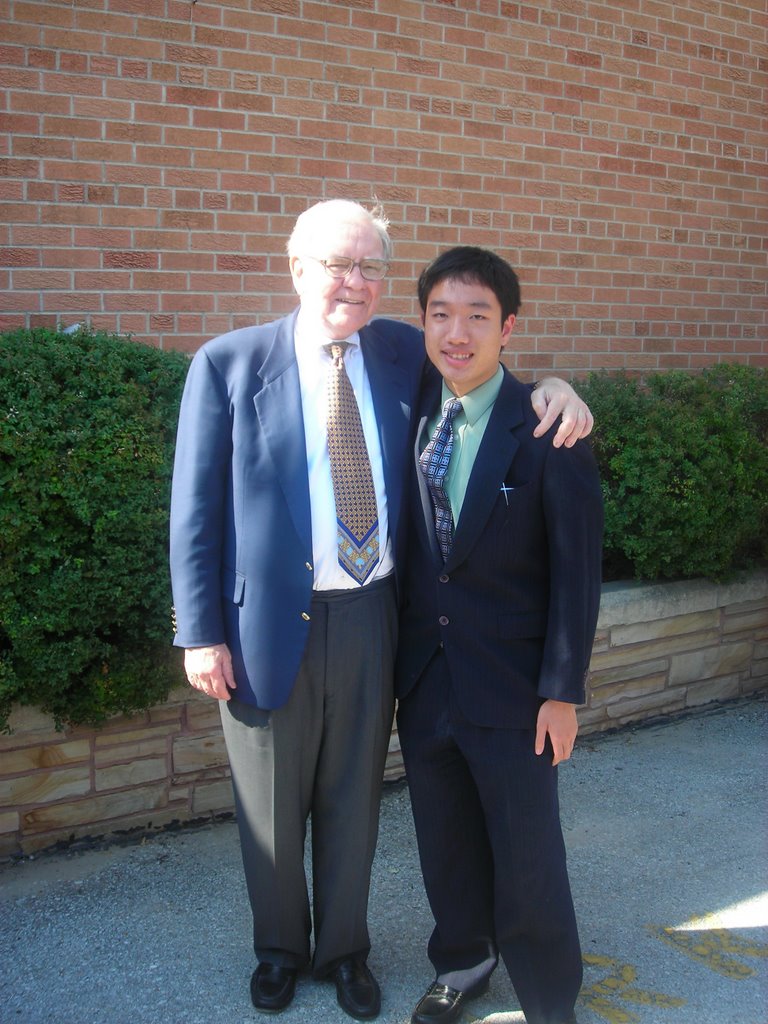
I am still in awe. Like I wrote in my facebook that sometimes, over time, or in person, your heroes can disappoint you. For two reasons: either you had unrealistic expectations of them, or you forgot that everyone no matter who they are is a human being, and human beings have flaws. Sometimes it's a combination of the two, but I can unabashedly state that Warren Buffett's one of my biggest heroes ever, and that he has not let me down.
The first thing in the 2 hour Question and Answer session, Warren Buffett begins by asking us to ask him any thing that we're thinking about, and he'll do his best to tell us everything he knows. He's a funny guy too, at many points during his responses he'd throw in a few jokes that really would make us laugh. No, we were not laughing at anything he said because he's Warren Buffett, but because he's a genuine guy, and being humorous is part of who he is.
My take on him is that he genuinely loves talking to students. I say this because he's let many students over the years visit him. We're definitely not the first, nor I don't think we're the last, but usually he doesn't let undergraduates visit him, so I feel lucky that as a freshman I got one of the rarest of the rarest of the rarest opportunities to go visit this man. He auctions off an hour or two of his time over lunch sometimes (like once or twice a year for charity), and people pay upwards of $600,000 for his time.
Well, I guess I should back up and start from the beginning (this looks like it might be a lengthy post). Warren Buffett is the second richest man in the world. Quite recently, this year actually, he has dedicated AT LEAST 85% of his wealth to charity. To the Bill and Melinda Gates Foundation, specifically. Additionally, he still lives in a house he bought in 1958, not a palacial castle, nor does he have a driver. He drives his own car, does mostly his own thing, and people with a fraction of his wealth act more pretentiously and more uncaringly than he does. Pretty much, he lives his life like a regular joe schmoe, even though he's richer than 99.999999 percent of us, like us. Wow. I got up at 3:30 a.m. to catch the plane to Omaha, with a layover in

Okay, sorry for all the details, but this is kind of my journal too! S
During his Q and A session, Warren Buffett quite seriously talked about one of his friends there at Omaha. She's an eighty year old polish jew, and he said she doesn't have very many friends. Her reasoning, she told him, is "when I make friends, I
One person in the back tried to ask a question, and because he couldn't hear that prompted him to tell a story, or a joke. He complained ab
On Capital Allocation, Warren Buffett walked us through on how he evaluates companies. First of all, he looks for good companies that are underpriced
Another of the stories he told us was his time with the richest man in Russia. He was deciding to invest between a Chinese company an
He spoke to the room, granted, it was filled with Harvard undergrads and Texas A & M business school students, and said we all have won the ovarian lottery. Imagine, before being born, if you were told to reach into a barrel with 6 billion tickets, and choose one. But wait, you are here, and most of you were born in America. Woul
I feel very, very fortunate to have been able to meet my hero these past two days. He even said, during his talk, that what helped him start was that he would go to the offices of CEOs and Professors and people he admired, and talk and lea